

Breech Positioning
If you've been told your baby is breech late in pregnancy, you may have heard that chiropractic care — specifically the Webster Technique — can help. Here's what that actually means.
What “Breech” Means
A breech baby is positioned bottom or feet down instead of head down, which can affect delivery options and planning as your due date approaches
How the Webster Technique Relates to Breech Positioning
The Webster Technique does not directly turn a baby. Instead, it focuses on reducing tension in the ligaments supporting the uterus and improving balance in the pelvis. The idea is that a balanced pelvis and reduced ligament tension may give baby more room to move into a head-down position on their own, if there's no other physical reason preventing it.

What the Research Says
Research on the Webster Technique's relationship to breech resolution is still developing, and it isn't a guaranteed method. It's best considered one supportive option among several, used alongside — not instead of — guidance from your OB or midwife.
Understanding Fetal Positioning
Understanding how babies typically move into position can help contextualize a breech diagnosis and what options exist.
Typical Positioning Timeline
Most babies move into a head-down position sometime in the third trimester, though the exact timing varies. Before around 34-36 weeks, a breech position is common and not usually a concern, since there's still time for baby to turn.
Types of Breech Presentation
Frank breech — baby's bottom is down with legs extended up toward the head
Complete breech — baby's bottom is down with knees bent, in a cross-legged-like position
Footling breech — one or both feet are positioned to come first
Common Contributing Factors to Breech Positioning
Amount of amniotic fluid
Placenta position
Uterine shape or fibroids
Multiple pregnancies (twins/multiples)
Simply baby's own positioning preference, with no clearly identifiable cause in many cases
Options Typically Discussed With Your OB
Depending on your specific situation, your OB may discuss options including watchful waiting (since many babies still turn before delivery), external cephalic version (a medical procedure to manually attempt turning baby), or delivery planning that accounts for breech positioning.
When to Seek Medical Evaluation
Any breech diagnosis should be discussed with your OB or midwife as a matter of course, since it directly affects delivery planning as your due date approaches.
Our Approach
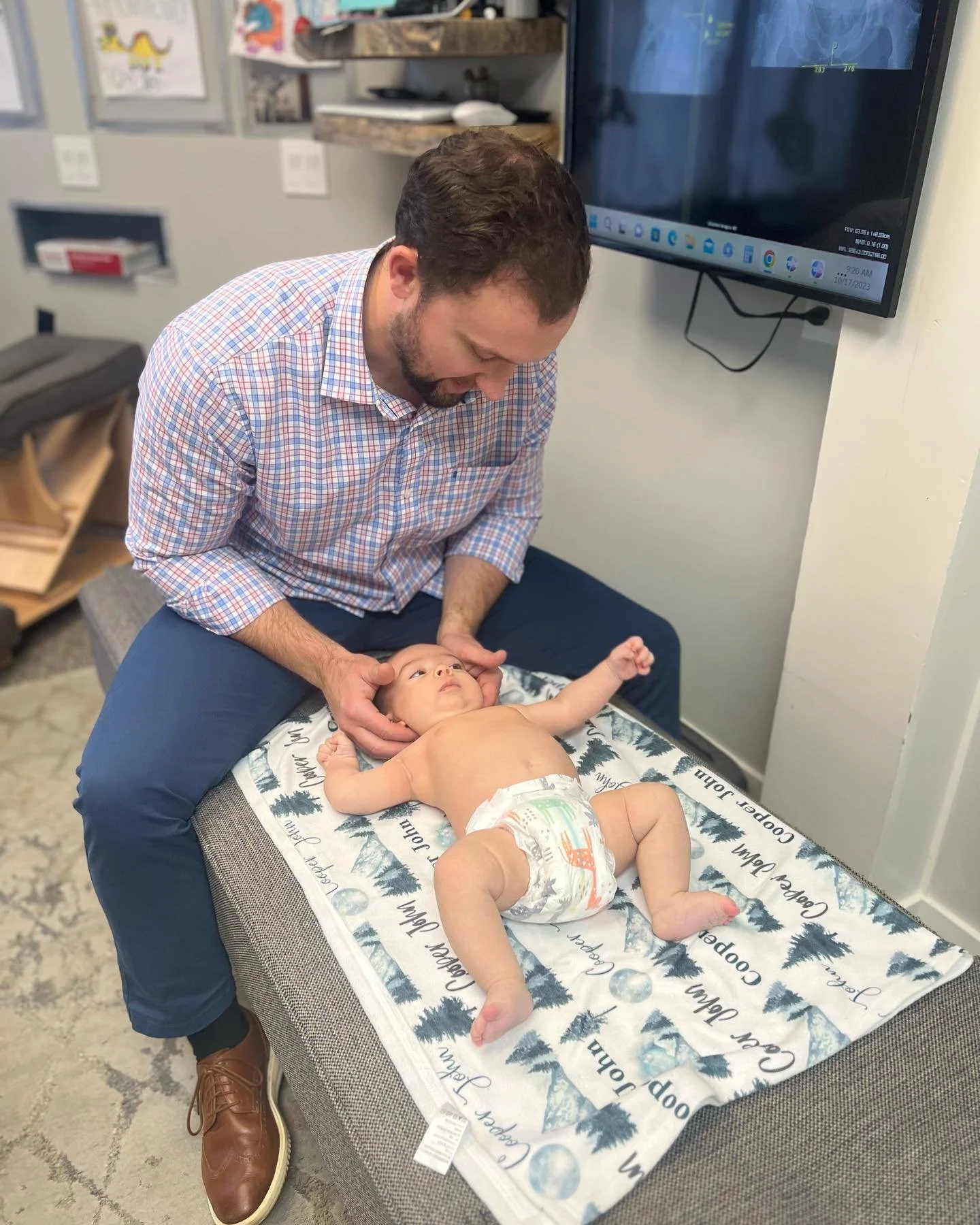
We perform a gentle, thorough evaluation of your newborn's neck and spine, checking for any areas of restricted movement related to the birth process, and use extremely light, pediatric specific techniques — nothing like an adult adjustment — to support normal function.
This information is for educational purposes and is not a substitute for medical advice. Please consult your OB or midwife about a breech diagnosis and your delivery options.
Frequently Asked Questions

-
No. It's a supportive option, not a guaranteed solution, and should be discussed with your OB or midwife alongside other options like spinning babies exercises or external cephalic version.
-
As soon as possible after a breech diagnosis is reasonable, though pelvic balance is valuable throughout pregnancy regardless of positioning.
-
Yes — your OB or midwife should always be part of the conversation about a breech diagnosis and your delivery options.
— not anxious over a breech diagnosis that suddenly makes the path forward feel less certain.
And sometimes that means looking beyond what you've been told to simply expect, toward gentle, whole-body care that works with your body to support balance and space as baby settles into position. Holistic, non-invasive chiropractic care helps to provide a clear and hopeful path forward for you and your family, meeting you exactly where you are, alongside the guidance of your OB or midwife every step of the way. You don't have to have all the answers today — just a willingness to explore what's possible, one gentle step at a time.