Toddler & Childhood Constipation
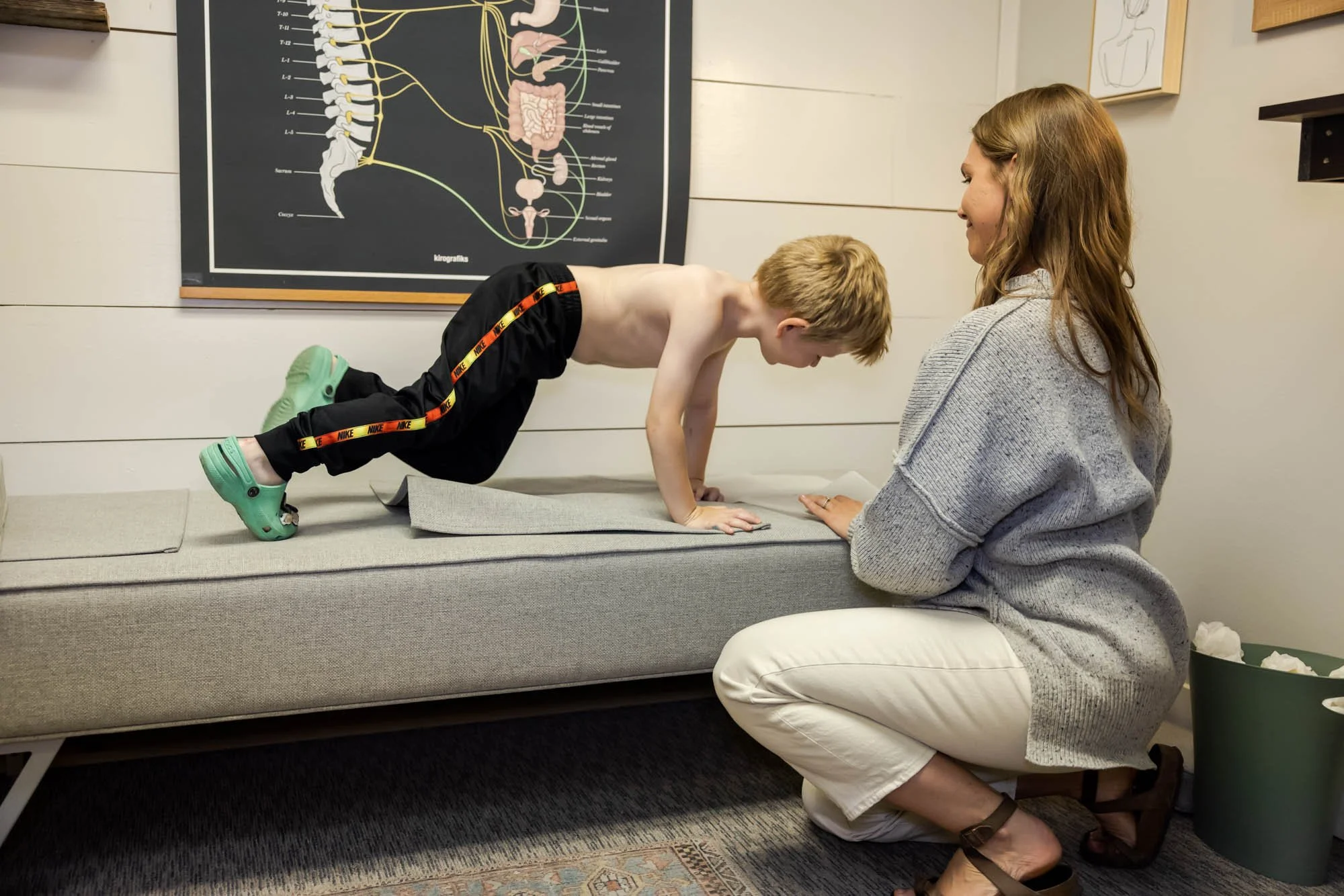
Constipation is one of the most common pediatric concerns parents bring up, often tied to big transitions like starting solid foods, potty training, or changes in diet and routine. At Two Sparrows, we offer gentle chiropractic evaluation as one option to explore alongside your pediatrician's guidance.
Symptoms We Commonly See
Infrequent or difficult bowel movements (should have at least one per day)
Straining, discomfort, or a child avoiding bowel movements (sometimes related to potty training stress)
Stomach discomfort or bloating
Symptoms that seem to correlate with diet changes, potty training, or stressful transitions
Understanding Childhood Constipation
Childhood constipation often has a behavioral component that's worth understanding separately from purely physical causes, since it shapes the most effective approach.
Why It May Be Related to Spinal Function
Digestive function, including bowel motility, is coordinated in part by the nervous system, which runs through the spine. For some children, tension or restriction in the lower spine may be a contributing factor alongside the many other common causes of childhood constipation, including diet, hydration, and behavioral factors like potty training resistance.
The Withholding Cycle
A common pattern in toddlers and young children: a painful or difficult bowel movement leads the child to consciously or unconsciously hold in future bowel movements to avoid discomfort, which allows stool to become larger and harder, making the next bowel movement even more painful — creating a self-reinforcing cycle that can be difficult to break without addressing it directly.
Common Triggers for This Cycle to Begin
Potty training transitions and any associated stress or pressure
Starting daycare or school, where a child may be reluctant to use an unfamiliar bathroom
Dietary changes, particularly reduced fiber or fluid intake
A single painful bowel movement that triggers withholding behavior
Common Contributing Factors
Insufficient fiber or fluid intake
The withholding cycle described above
Tension or restriction in the lower spine affecting nerve function related to digestion
Changes in routine or environment
When to Seek Medical Evaluation
Contact your pediatrician for: blood in the stool, severe abdominal pain, vomiting, poor weight gain, or constipation that isn't improving with dietary changes and increased fluid intake over a reasonable period — your pediatrician can also help address the withholding cycle directly if it's a factor.
Our Approach
We evaluate movement and alignment through your child's spine, particularly the low back and pelvis, and use gentle, pediatric-specific adjustments aimed at supporting normal nervous system function.
This information is for educational purposes and is not a substitute for medical advice. Please consult your pediatrician about persistent or severe constipation.
Frequently Asked Questions

-
Most cases are common and resolve with dietary changes, hydration, and time, though it's worth mentioning to your pediatrician, especially if it's persistent or severe. If these things aren’t resolving your child’s chronic constipation, specific chiropractic care would be worth exploring.
-
Yes — chiropractic care complements, but doesn't replace, your pediatrician's guidance on diet, hydration, and other contributing factors.
-
Sometimes — stress or discomfort around potty training can contribute to a child holding bowel movements, which can create a cycle of constipation. We're happy to discuss your child's specific situation.
— not straining, holding it in, or dreading the bathroom the way it's become for your family lately.
Sometimes that means looking beyond the obvious, and toward gentle, whole-body care that supports how your child's body was designed to grow, move, and function.
Holistic, non-invasive, Gonstead chiropractic care helps to provide a clear and hopeful path forward for you and your family, meeting your child exactly where they are, alongside your pediatrician's guidance every step of the way.
You don't have to have all the answers today — just a willingness to explore what's possible, one gentle step at a time.