Growing Pains
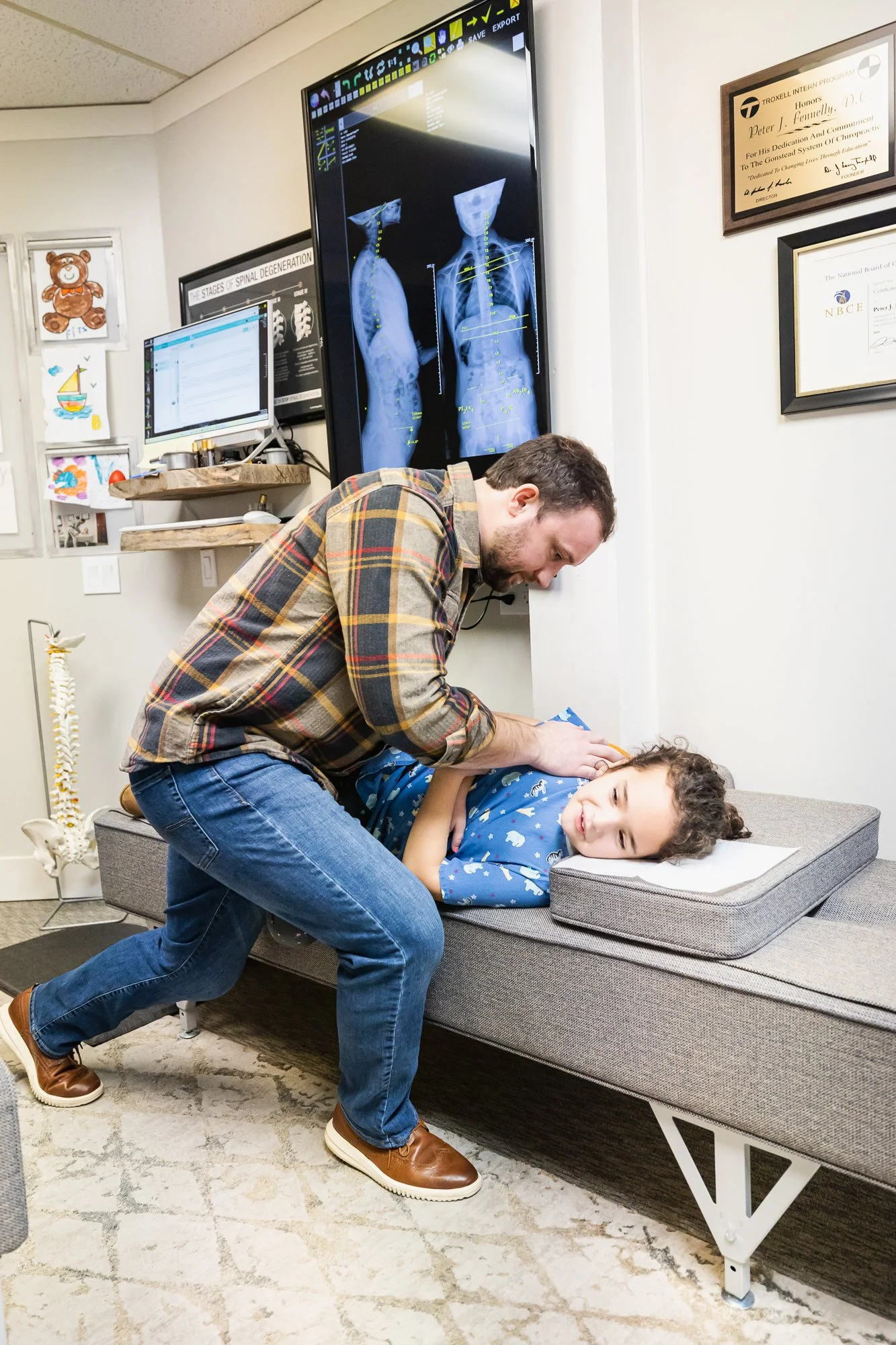
"Growing pains" are a common complaint in active, growing kids — usually aches in the legs that show up at night. At Two Sparrows, we evaluate whether alignment or movement patterns may be contributing to your child's discomfort.
Aching in the legs, often at night, especially in the calves, thighs, or behind the knees
Discomfort that comes and goes, without an obvious injury
Pain that seems more noticeable after very active days
Symptoms We Commonly See
Understanding Growing Pains
Despite the name, growing pains aren't actually caused by the physical act of growing — understanding what we currently know (and don't know) about them can help provide useful context.
Why It Happens
The exact cause of growing pains isn't fully understood, but uneven strain on a rapidly growing musculoskeletal system is thought to play a role, especially in very active kids. In some cases, movement restriction or postural imbalance may contribute to which areas feel the most strain.
What We Know
Growing pains typically occur in the legs, most often the calves, shins, or behind the knees
They're characteristically worse in the evening or at night, and typically absent in the morning
They most commonly affect kids between ages 3-12, though the exact age range varies
Despite the name, they don't appear to be directly linked to actual growth spurts based on available research — the name reflects an older, not fully accurate theory
Leading Theories on Contributing Factors
Overuse from high daytime activity levels in active kids
Lower pain threshold variability at night
Possible connection to restricted movement patterns in the legs, hips, or spine
Distinguishing Growing Pains From Other Causes
Growing pains are typically: bilateral (both legs), not associated with swelling or redness, and don't cause limping during the day. Pain that's one-sided, associated with swelling, or causes a limp warrants a closer look rather than being assumed to be growing pains.
When to Seek Medical Evaluation
Contact your pediatrician for leg pain that's one-sided, associated with swelling, redness, or warmth, causes a limp, is present in the morning, or is accompanied by fever — these are not typical growing pain patterns and deserve evaluation.
Our Approach
We evaluate your child's spine, hips, and legs for any restrictions or imbalances that could be contributing to their discomfort, and use gentle, pediatric-specific adjustments to support normal movement.
This information is for educational purposes and is not a substitute for medical advice. Please consult your pediatrician about severe, one-sided, or persistent leg pain.
Frequently Asked Questions

-
Usually not — they're a common, benign part of childhood development. That said, pain that's severe, one-sided, associated with swelling, or interferes significantly with activity should be evaluated by your pediatrician to rule out other causes.
-
Some parents report their child has fewer or less intense episodes with chiropractic care, though individual results vary.
-
Yes — pediatric adjustments use significantly less force than adult adjustments and are specifically adapted to a child's developing body.
—not held back by achy legs at the end of an already tough day. Sometimes that means looking beyond the obvious, and toward gentle, whole-body care that supports how your child's body was designed to grow, move, and heal. Holistic, non-invasive, Gonstead chiropractic care helps to provide a clear and hopeful path forward for you and your family, meeting your child exactly where they are, through growth spurts, busy days of play, and everything in between.
You don't have to have all the answers today — just a willingness to explore what's possible, one gentle step at a time.