Herniated or Bulging Discs
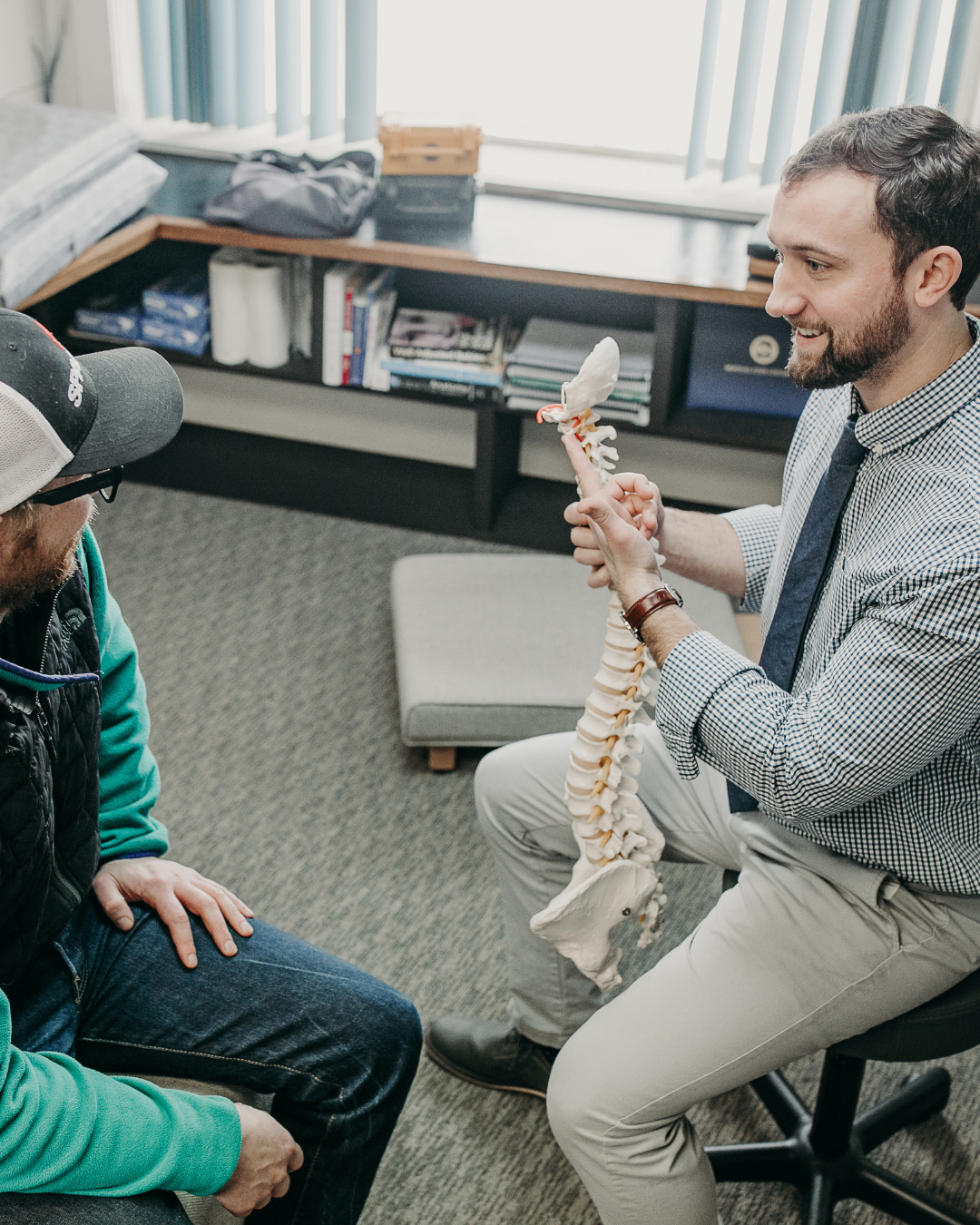
A herniated or bulging disc diagnosis can feel alarming, but conservative care — including chiropractic — is often an appropriate first-line approach for many patients. At Two Sparrows, we take a careful, individualized approach to disc-related conditions.
Symptoms We Commonly See
Localized back or neck pain
Radiating pain, numbness, or tingling into an arm or leg
Pain that worsens with certain movements, like bending or sitting
Muscle weakness in more significant cases
Understanding Disc Herniation
The terms "bulging" and "herniated" disc are often used interchangeably by patients, but they describe different degrees of the same underlying process.
Why It Happens
Spinal discs act as cushions between vertebrae. A herniation or bulge occurs when the disc's outer layer weakens or tears, allowing the inner material to press outward — sometimes irritating nearby nerves, which causes the radiating symptoms many patients experience.
Stages of Disc Injury
Disc bulge — the disc extends slightly beyond its normal boundary, but the outer layer remains intact
Disc herniation (protrusion) — the outer layer weakens and the inner material pushes further outward, sometimes contacting nearby nerves
Disc extrusion — inner disc material breaks through the outer layer entirely
Sequestration — a fragment of disc material separates completely from the disc
Not every herniation causes symptoms — many people have disc changes visible on imaging with no pain at all, which is an important, often reassuring fact to know.
Common Contributing Factors
Age-related changes to disc hydration and structure
Repetitive bending, lifting, or twisting
Sudden heavy lifting with poor form
Prolonged sitting, which increases pressure on lower discs
When to Seek Medical Evaluation
Seek prompt medical attention for disc-related symptoms accompanied by: progressive weakness, numbness in the groin or inner thighs, or loss of bladder/bowel control — these can indicate a more significant condition (cauda equina syndrome) requiring emergency care.
Our Approach
We conduct a thorough exam, including X-rays, and take a careful history of your symptoms to understand the extent of the issue. Depending on severity, care may involve gentle, modified adjustments, and in some cases, co-management or referral to another provider if your case is outside the scope of conservative chiropractic care.
This information is for educational purposes and is not a substitute for medical advice. Please seek immediate medical care for significant weakness, numbness, or loss of bladder/bowel control.
Frequently Asked Questions

-
Chiropractic care can't "fix" the disc structurally, but it can help reduce pressure and irritation contributing to your symptoms. Many patients with disc-related pain find meaningful relief with conservative care.
-
Not always — X-rays are typically part of our exam process, and we'll discuss whether additional imaging like an MRI is appropriate based on your symptoms and exam findings.
-
Most disc issues respond to conservative care. Surgery is generally considered when conservative approaches haven't helped, or when there are certain red-flag symptoms like significant weakness or loss of bladder/bowel control.
— not bracing every time you bend, lift, or sit for too long, wondering if today's the day it flares up again.
Holistic, non-invasive chiropractic care helps to provide a clear and hopeful path forward for you and your family, meeting you exactly where you are, whether you're dealing with a nagging ache that's overstayed its welcome or searching for real answers after years of being told to just live with it. You don't have to have all the answers today — just a willingness to explore what's possible, one gentle step at a time.