Torticollis (Head Tilt)
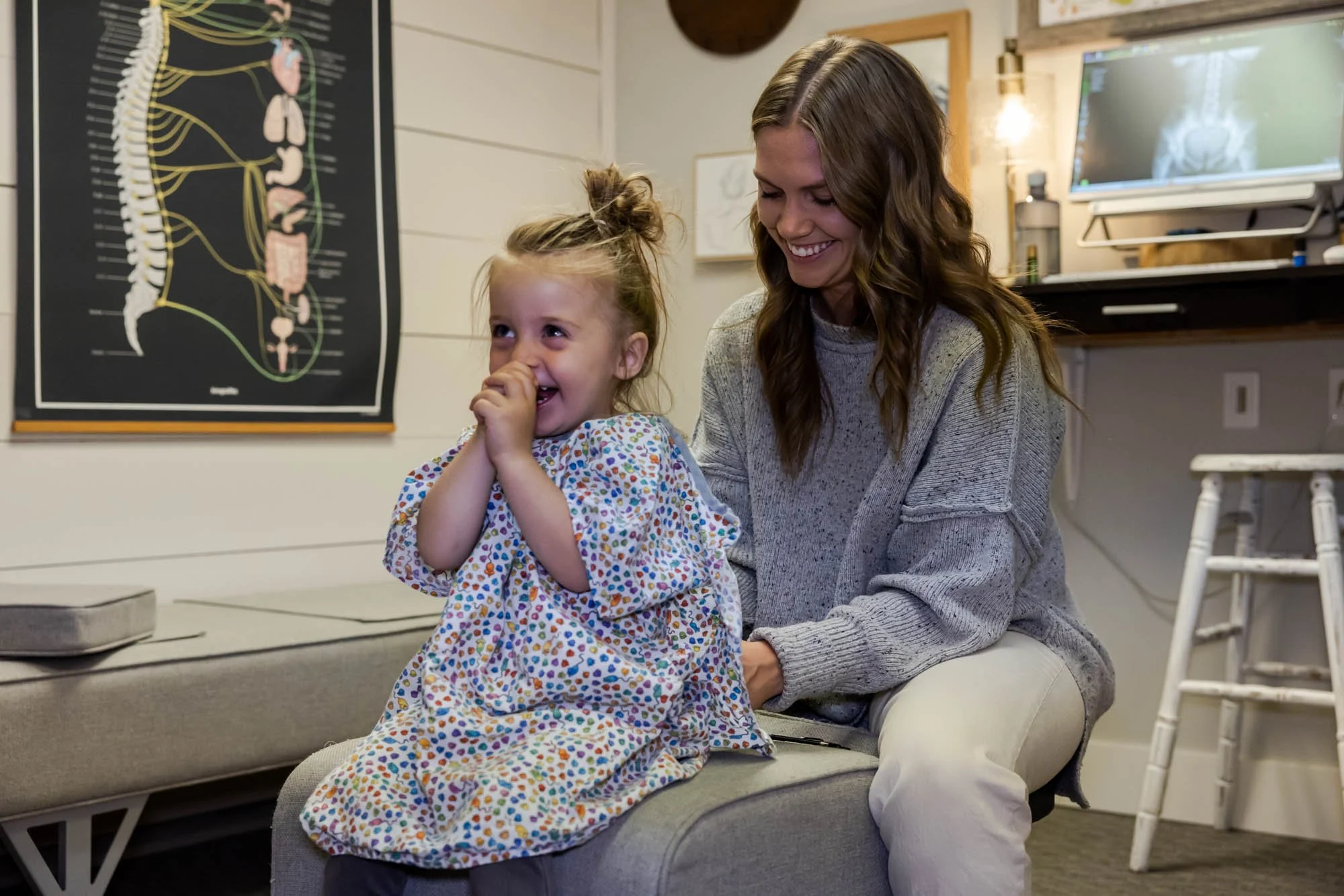
Torticollis — a tightness or shortening of the neck muscles that causes a baby's head to consistently tilt or turn to one side — is a common condition we see in infants. At Two Sparrows, we offer gentle, pediatric-specific care to support normal neck movement.
Symptoms We Typically See
A consistent head tilt to one side, or preference for turning the head one direction
Difficulty turning the head fully to one side
A flattened area on one side of the head (sometimes related to positional preference)
Discomfort or fussiness during tummy time or certain movements
Understanding Torticollis
Torticollis exists on a spectrum of severity, and understanding the general categories can help clarify what to expect from care.
Why It Happens
Torticollis can develop from positioning in the womb, the physical process of birth, or muscular tightness that develops in early infancy. Left unaddressed, it can contribute to uneven head shape and delays in comfortable, symmetrical movement.
Common Types
Congenital muscular torticollis — present from birth or shortly after, related to tightness in the sternocleidomastoid muscle, often from positioning in the womb or the birth process
Positional torticollis — develops after birth from a consistent positional preference, which can become self-reinforcing as the baby continues favoring the same position
Typical Severity Range
Mild — slight head tilt or turning preference, full range of motion still achievable with gentle encouragement
Moderate — more noticeable tilt, some resistance to turning the head fully in one direction
More significant — pronounced restriction, often accompanied by developing plagiocephaly (see our Plagiocephaly page)
Why Early Intervention Matters
An infant's neck muscles and connective tissue are much more responsive to gentle intervention in the first several months of life than later, which is part of why addressing torticollis early tends to lead to better outcomes with less intervention needed overall.
When to Seek Medical Evaluation
Contact your pediatrician for torticollis that isn't improving with home positioning strategies and chiropractic or physical therapy support, or if you notice any additional symptoms like a visible mass in the neck, which warrants prompt evaluation.
Our Approach
We gently evaluate your baby's neck movement and any areas of restriction, using very light, specific techniques to support improved range of motion. We may also recommend positioning and stretching guidance for home, and in some cases, co-management with a pediatric physical therapist.
This information is for educational purposes and is not a substitute for medical advice. Please consult your pediatrician about your baby's torticollis.
Frequently Asked Questions

-
It's common and often responds well to early intervention. Addressing it early is important, since it can affect head shape and movement patterns if left untreated for a long time.
-
Yes, when performed by a chiropractor with pediatric-specific training — techniques for infants are extremely gentle.
-
In many cases, a combined approach with pediatric PT for stretching and strengthening, alongside chiropractic care for movement restriction, works well together.
— not always turning their head the same direction, or resisting tummy time no matter how many ways you try.
Sometimes that means looking beyond the obvious, and toward gentle, whole-body care that supports how your baby's body was designed to grow, move, and heal.
Holistic, non-invasive, Gonstead chiropractic care helps to provide a clear and hopeful path forward for you and your family, meeting your baby exactly where they are, right from those very first, tender weeks of life
You don't have to have all the answers today — just a willingness to explore what's possible, one gentle step at a time.