Numbness & Tingling (Extremities)
Numbness or tingling in the arms, hands, legs, or feet can be unsettling, especially without a clear cause. For some patients, these symptoms are connected to nerve irritation somewhere along the spine.
Numbness or tingling in the hands, fingers, feet, or toes
Symptoms that seem to worsen with certain positions or activities
A "pins and needles" sensation
Symptoms alongside neck or low back discomfort
Symptoms We Commonly See
Understanding Numbness and Tingling
Numbness and tingling (often described as "pins and needles") happen when a nerve's normal signal is disrupted somewhere along its path — and where that disruption occurs determines where you feel the symptoms.
Why It Happens
Nerves that supply the arms and legs originate from the spine. When there's restriction, misalignment, or disc-related pressure along a nerve's path — whether in the neck (affecting the arms) or low back (affecting the legs) — it can result in numbness or tingling downstream.
Common Patterns and What They May Suggest
One arm/hand, following a specific path — often related to nerve irritation in the neck (see our Pinched Nerve page)
Both hands, especially at night — may suggest carpal tunnel-related causes (see our Carpal Tunnel Syndrome page)
One leg/foot, following a specific path — often related to sciatica or low back nerve irritation
Both feet, gradually developing — more often related to circulation or other systemic causes requiring medical evaluation
Common Contributing Factors
Nerve compression from disc issues or joint restriction along the spine
Repetitive strain affecting a specific nerve pathway
Poor posture sustained for long periods
Circulation-related factors, which require medical rather than chiropractic evaluation
When to Seek Medical Evaluation
Seek emergency medical care for sudden numbness affecting one side of the body, especially with speech difficulty, facial drooping, or vision changes — these can be signs of a stroke. Also seek prompt evaluation for numbness that's progressively worsening or affecting bladder/bowel control.
Our Approach
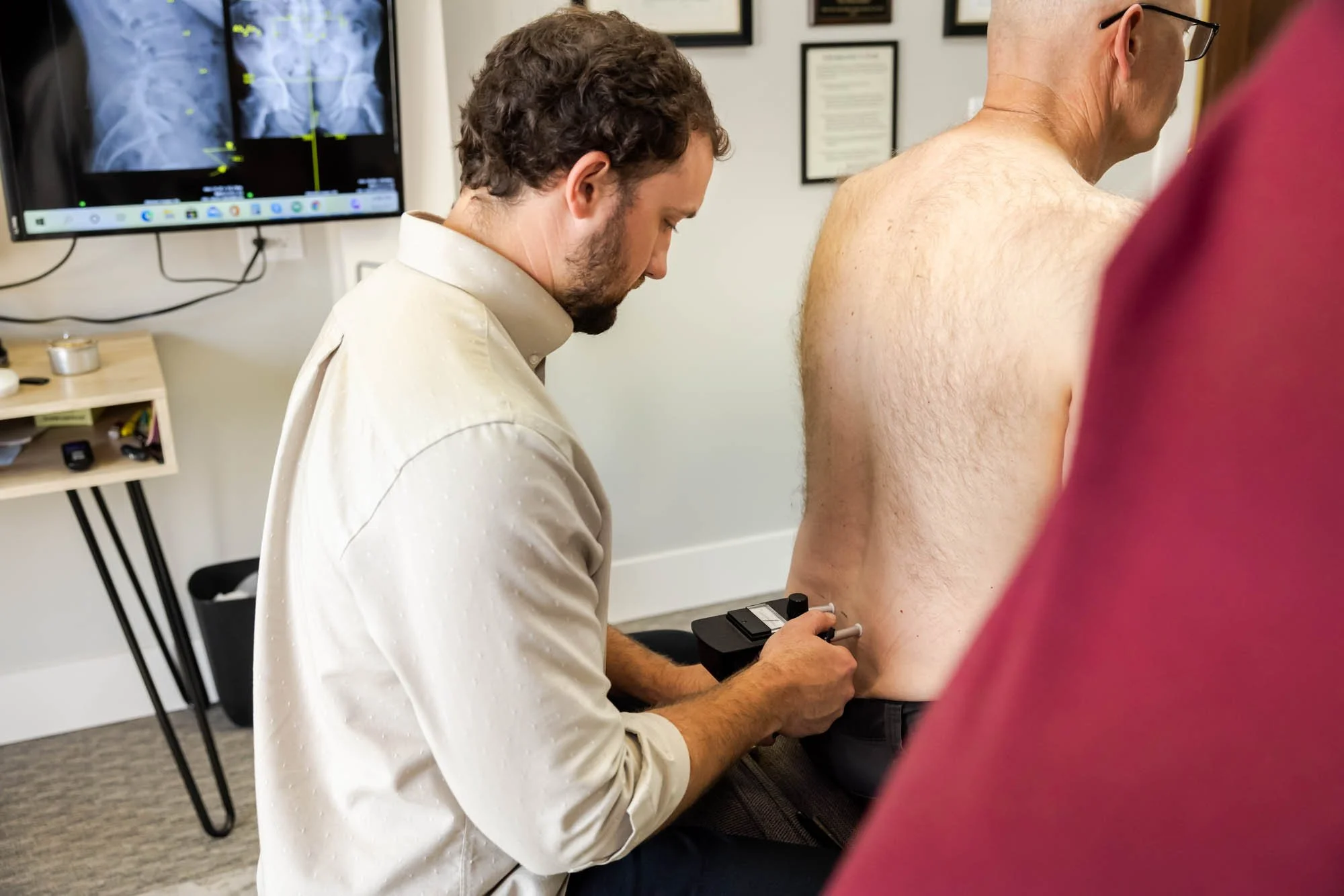
We conduct a thorough exam, including X-rays when appropriate, to identify where along the spine irritation may be occurring. Adjustments are targeted to the specific area contributing to your symptoms.
This information is for educational purposes and is not a substitute for medical advice. Please seek emergency medical care for sudden numbness on one side of the body, especially with speech difficulty or facial drooping.
Frequently Asked Questions

-
Not always — numbness and tingling can also stem from other causes, including nerve entrapment (like carpal tunnel), circulation issues, or other medical conditions. A thorough evaluation helps determine the likely source.
-
If numbness is sudden, severe, affects one side of the body suddenly, or comes with other symptoms like difficulty speaking or facial drooping, seek emergency medical care immediately, as these can be signs of a stroke. -
This depends on the underlying cause and how long you've had symptoms — we'll discuss a realistic plan after your exam.
— not bracing before you bend down, dreading the drive, or planning your day around a back that never quite feels right.
Holistic, non-invasive chiropractic care helps to provide a clear and hopeful path forward for you and your family, meeting you exactly where you are, whether you're dealing with a nagging ache that's overstayed its welcome or searching for real answers after years of being told to just live with it. You don't have to have all the answers today — just a willingness to explore what's possible, one gentle step at a time.