

Whiplash / Car Accident Injuries
Car accidents — even relatively minor "fender bender" collisions — can cause real, lasting strain to the neck and spine. At Two Sparrows, we help patients recover from whiplash and other accident-related injuries with a thorough, individualized approach.
Neck pain and stiffness, sometimes delayed by a day or two after the accident
Headaches, especially at the base of the skull
Reduced range of motion in the neck
Upper back and shoulder tension
Dizziness or difficulty concentrating in more significant cases
Symptoms We Commonly See
Understanding Whiplash
Whiplash injuries exist on a spectrum, and understanding the general grading helps set expectations for what recovery might look like.
Why It Happens
Whiplash occurs when the head is suddenly and forcefully moved back and forth, straining the muscles, ligaments, and joints of the neck — even at relatively low collision speeds. Symptoms don't always appear immediately, which is why it's important to be evaluated even if you feel "okay" right after an accident.
General Whiplash Grades
Grade I — neck stiffness or tenderness with no significant physical signs on examination
Grade II — neck symptoms with reduced range of motion and point tenderness
Grade III — neck symptoms with neurological signs, such as reduced reflexes or weakness
Grade IV — neck symptoms with fracture or dislocation, requiring immediate emergency care
Most whiplash injuries we see fall into Grades I-II and respond well to conservative chiropractic care.
Why Symptoms Are Often Delayed
Whiplash symptoms frequently don't appear until 24-72 hours after an accident, since the initial adrenaline response and inflammation process take time to develop. This is exactly why an evaluation soon after an accident matters, even if you feel "fine" immediately afterward.
Common Contributing Factors to Recovery Time
Speed and direction of impact
Whether the head was turned at the moment of impact
Prior history of neck injuries
How soon appropriate care was started after the accident
When to Seek Medical Evaluation
Seek immediate medical care for any accident involving loss of consciousness, severe pain, numbness or weakness in the arms, or suspected fracture. For milder symptoms, an evaluation within the first few days after an accident is still recommended, even without immediate pain.
Our Approach
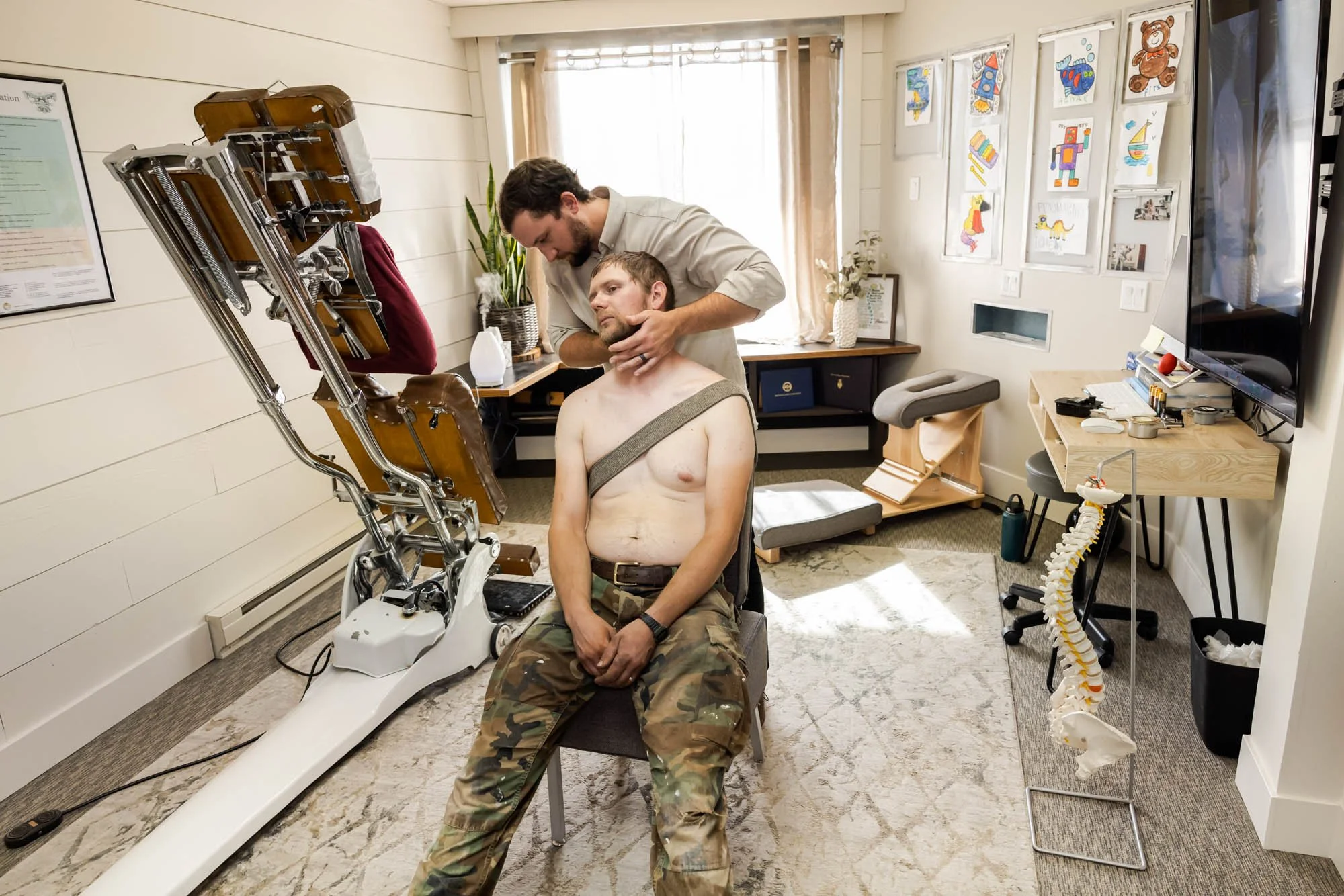
We perform a thorough exam, including X-rays when appropriate, to assess the extent of the injury and build a care plan targeted to your specific findings. Because whiplash injuries can involve compensations throughout the spine, we evaluate beyond just the neck.We use a thorough, neurologically focused Gonstead exam to evaluate function in the upper neck and identify whether restriction there may be contributing to your symptoms. Adjustments are precise and specific to what's found.
This information is for educational purposes and is not a substitute for medical advice. Please seek immediate medical care for any accident involving loss of consciousness, severe pain, or other emergency symptoms.

Frequently Asked Questions
-
Yes. Whiplash symptoms can be delayed, and an early evaluation helps catch and address issues before they become chronic.
-
As soon as reasonably possible — early evaluation and care generally supports better recovery outcomes.
-
Please contact our office to discuss documentation and any insurance-related questions specific to your situation.
Everyone deserves to feel like themselves again
— not still feeling the effects of an accident days or weeks later, wondering if this stiffness and pain is ever going to fully let go.
Holistic, non-invasive chiropractic care helps to provide a clear and hopeful path forward for you and your family, meeting you exactly where you are, whether you're dealing with a nagging ache that's overstayed its welcome or searching for real answers after years of being told to just live with it. You don't have to have all the answers today — just a willingness to explore what's possible, one gentle step at a time.