

The Gonstead Approach for Newborns, Children & Teens
Every parent wants to give their child the healthiest possible start — sometimes that means looking beyond the obvious, and toward gentle, whole-body care that supports how your child's body was designed to grow, move, and heal. At Two Sparrows, we use the Gonstead method — the same precise, analysis-driven approach we use with our adult patients — adapted specifically for every stage of childhood, from a newborn's very first days through the busy, active teenage years.
Here's what that actually looks like at each stage, and why precision matters just as much for kids as it does for adults.
Why Gonstead for Kids?
Gonstead is built around a simple idea: analyze thoroughly before adjusting, rather than applying a generic technique to every patient. For adults, that means a structured five-part exam and, when appropriate, full spine X-rays. For kids, that same commitment to precision remains — but the how changes completely. Every technique, every amount of pressure, and every positioning choice is scaled to a child's size, developmental stage, and comfort.
This precision matters more, not less, with kids. A newborn's spine is still soft and rapidly developing. A growing child's body is constantly changing. A teenager may be going through a growth spurt that's outpacing the rest of their development. Understanding exactly what's happening — rather than guessing — is what allows care to stay both gentle and genuinely effective at every age.
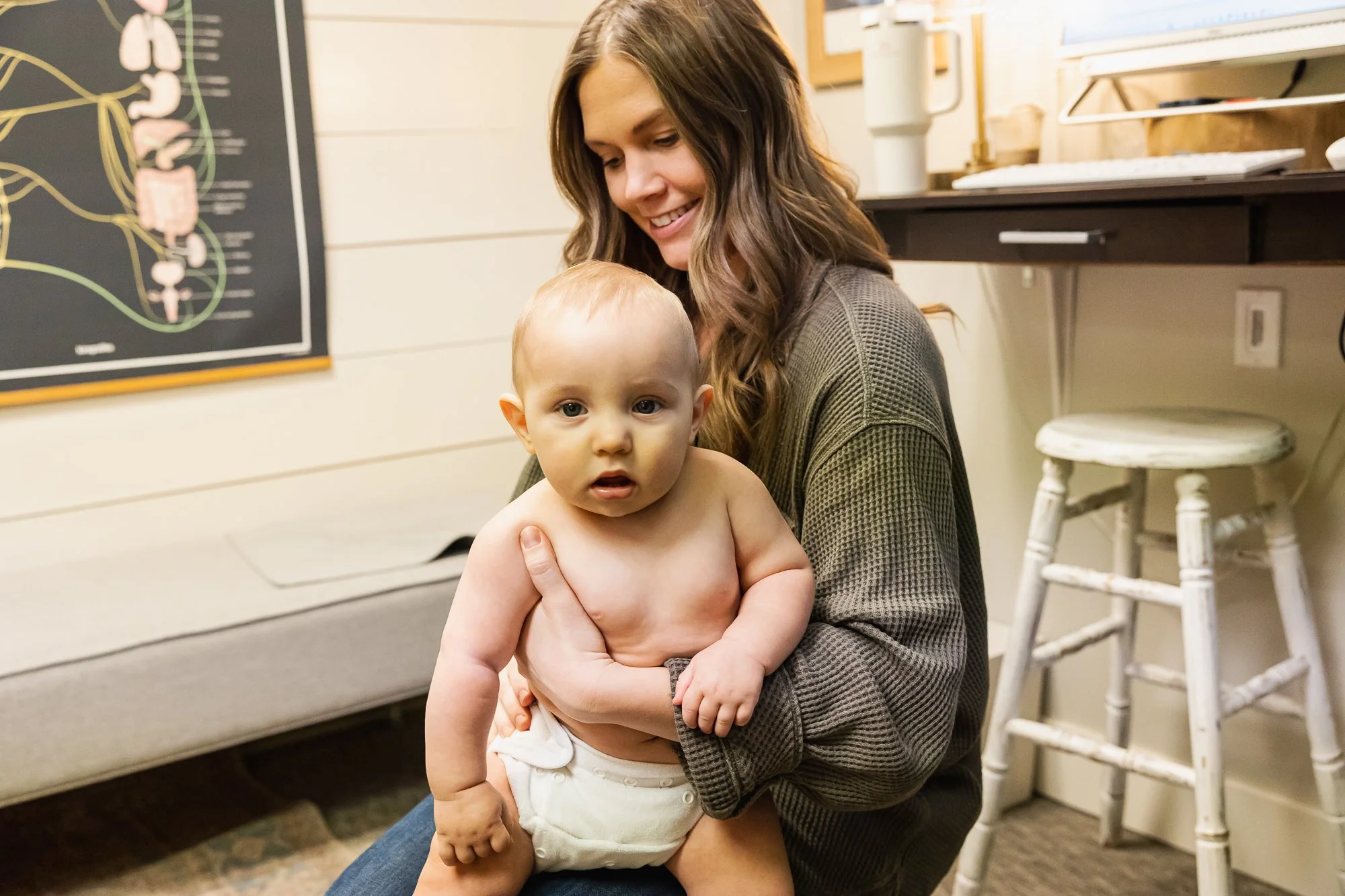
Newborns & Infants
A newborn's first days involve real physical demands — the birth process itself puts mechanical stress on a baby's neck and spine, even in an uncomplicated delivery. At this stage, a Gonstead-based evaluation is about as gentle as chiropractic care gets: light touch, careful observation, and adjustments using only a few ounces of pressure, often compared to testing the ripeness of an avocado.
Common newborn and infant concerns we evaluate include:
On a very regular basis, we see newborns and infants coming in to the office for breastfeeding difficulty, constipation, and troubles with sleeping, read a couple stories below about how chiropractic could help!

Toddlers and Young Children
As kids start moving — crawling, walking, climbing, falling (a lot of falling) — their bodies take on new physical demands, and small restrictions from earlier infancy sometimes become more noticeable. This stage is also when many parents first bring in a child for a specific concern, rather than proactive newborn care.
Common toddler and young child concerns we evaluate include:
At this age, exams stay brief and flexible — toddlers rarely sit still, and a good pediatric-trained chiropractor adapts to that reality rather than fighting it.
School-Age Kids and Teens
Once kids reach school age, new demands enter the picture: heavier backpacks, hours at a desk, more screen time, and — for many Whitefish families — increasingly serious involvement in sports, from ski team to hockey to soccer. Teenage growth spurts add another layer, sometimes outpacing the rest of the body's development in ways that create real, temporary imbalance.
Common school-age and teen concerns we evaluate include:
By this stage, exams and adjustments start to more closely resemble adult care in structure — full spine X-rays are sometimes appropriate, particularly when scoliosis or a specific injury is involved — but force and technique remain carefully scaled to a still-developing body.
How Chiropractic Care is Making a difference for Whitefish, MT Families

Our newborn was incredibly fussy and struggled with awful diapers and a nurse recommended trying Two Sparrows. I was a little skeptical at first but decided to try it out... anyways, literally THE NEXT DAY after our newborn's first adjustment with Dr. Jordan his wild diapers stopped and he began having normal diapers. He's now 5 months and the happiest little dude! I'm a believer now (lol) and have brought our eldest child and my own achy postpartum body into the office. 10/10 recommend!
Tenesha Z.
I have almost 5 month old twins, and I've been taking one of my twins to Dr. Jordan since he was a little over 2 months old. We had a friend recommend Two Sparrows because he was having horrible reflux episodes (back arching, screaming crying etc), and after trying everything we could this was our last ditch effort. I have nothing but amazing things to say about the overall care that he has received from her...and his reflux episodes have basically completely resolved. She is so kind and gentle with him every time. Getting adjustments has even helped him progress quicker with his tummy time and rolling! We are so happy with his results, that I have started taking his twin sister now as well to see if we can help her with her fussiness and stamina. I cannot say enough great things about Two Sparrows. If you are looking for pediatric chiropractic care for your little, this is the place for you!
Jess B.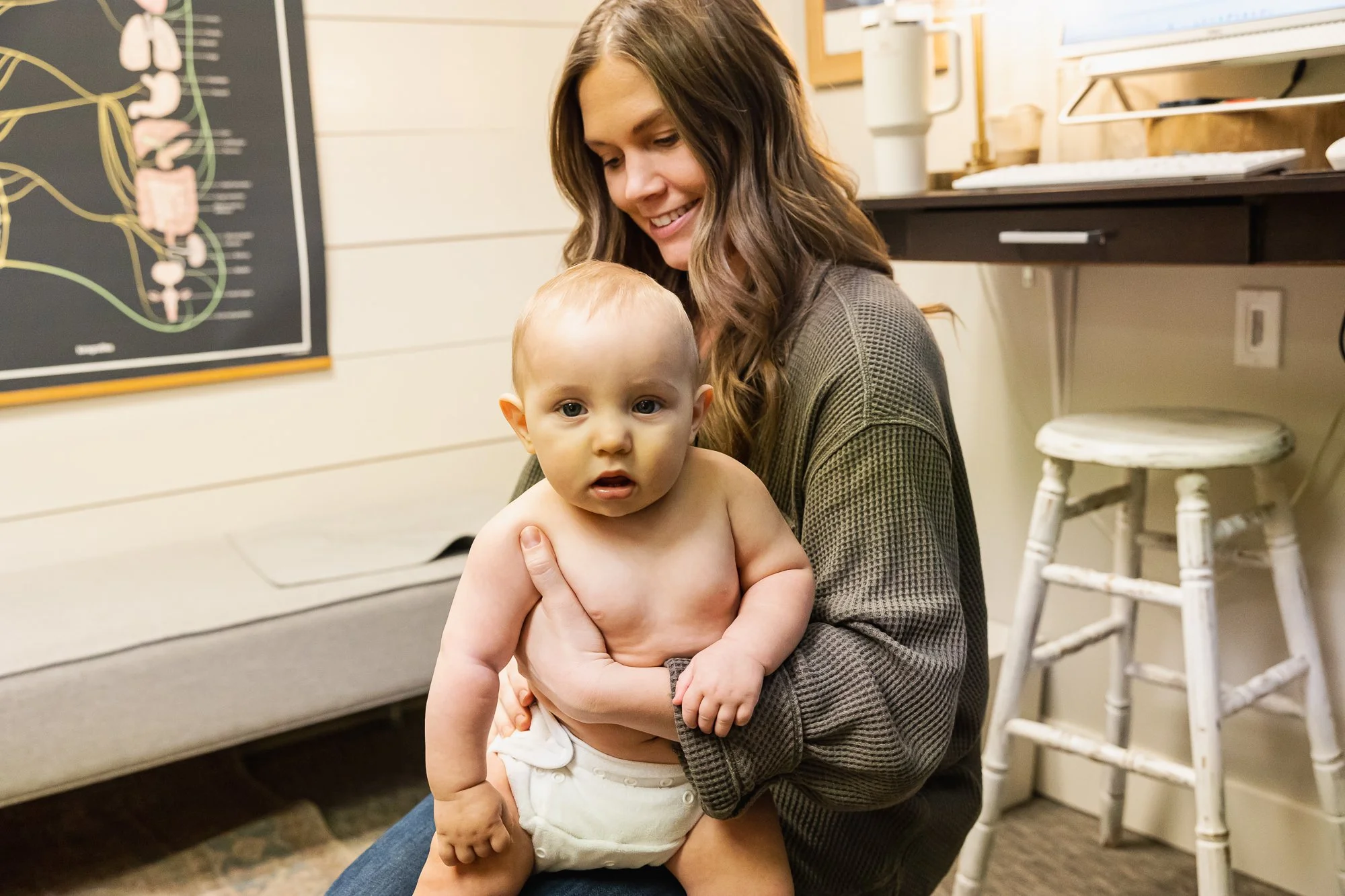
My baby was adjusted just 5 days after he was born and has been adjusted a few more times when he was very constipated once and the other two times he was spitting up a lot. Every time we have taken baby in, those issues were resolved after an adjustment. I have recommended Two Sparrows to everyone I know! I only wish I had Dr. Jordan in my life earlier, especially when I was pregnant with my first. Dr. Jordan was a huge part of my prental wellness care and now part of my entire family's wellness routine. You will be well taken care of here and treated like family.
Natalie B. 
What does gonstead chiropractic actually look like for my child?
Before your visit, you'll fill out a brief pediatric intake form through our online booking site, this covers your child's birth history (including any relevant details about labor and delivery), developmental milestones, current symptoms or concerns, and your overall goals for care. This gives us a clear starting picture before your child even walks through the door. Typically, families are booking out at least a week in advance to secure the desired day or time. The paperwork takes about 15 minutes to fill out online.
Step 1: Scheduling and Intake
Your visit starts with a conversation, not an exam table. We'll talk through your intake information, ask follow-up questions, and make sure we understand exactly what brought you in — whether that's a specific concern like torticollis or colic, or simply proactive wellness care. This is also your chance to ask any questions before the physical evaluation begins.
Step 2: The Consultation
Next comes a gentle, age-appropriate exam. What this looks like depends heavily on your child's age:
Step 3: The Physical Evaluation
Newborns and infants: observation of movement and positioning, gentle palpation to check for areas of restriction, and an assessment of range of motion — often done with baby in a parent's lap or on a soft pad
Toddlers and young children: similar hands-on evaluation, adapted to a child who's unlikely to hold still, watching how they move naturally during the visit as much as through formal testing
School-age kids and teens: an exam that more closely resembles an adult evaluation, including postural assessment and motion/static palpation to identify specific areas of restriction. Digital x-rays may be recommended depending on your child’s specific history.
X-rays are not a routine part of every pediatric visit, and are never used for infants or very young children. For older kids and teens, we may recommend X-rays selectively — most commonly when evaluating scoliosis or assessing a significant injury or physical/fucntional concern— always explained clearly beforehand, with the reasoning behind the recommendation.
Step 4: X-Rays, When Appropriate
Once your child's evaluation (and X-rays, if taken) is complete, we'll walk you through exactly what we found in plain, understandable language — no unexplained jargon. This is where we connect what we observed to your child's specific symptoms or concerns, and talk through what a care plan tailored to your child might look like. This visit is typically following the intial appointment (not on the same day), so the doctor’s have time to fully analyze and understand and exam/x-ray findings.
Step 5: The Report of Findings
Newborns: extremely light, specific pressure — often described as comparable to testing the ripeness of an avocado — typically with no audible sound and no forceful movement of any kind, just gentle controlled pressure exactly where the joint needs
Toddlers: similarly gentle, adapted technique, often performed while your toddler sits in your lap or stays engaged with a toy on an adjusting table
Older kids and teens: more comparable to an adult adjustment in technique, though still using less force than a fully grown adult would receive, and always explained before it happens
If appropriate based on the exam, your child's first adjustment typically happens at the end of this same visit. What this looks like varies significantly by age:
Step 6: The adjustment
Throughout the adjustment, we're watching your child's comfort closely — if anything feels off, we pause and adjust our approach.
Following the visit, we'll talk through next steps and what to expect— we’ll tell you when we think is appropriate to come in next, and we’ll go over how your child did post-adjustment so we can best formulate a plan of care moving forward.
It's normal for very young children to be a bit fussy or sleepy after a visit, similar to how they might respond after any new experience — this typically resolves quickly and isn't a cause for concern.
We will have some home care suggestions (like specific tummy time positioning or stretches, depending on your child's age and needs). We will also give an idea of what timeline to expect moving forward. This visit is an additional opportunity to answer any questions that may have surfaced following the initial visit. No visit is rushed, and we want to ensure that not only your child feels comfortable, but also that you feel at ease and well taken care of.
Step 7: What happens after
Questions Before Your Child's First Visit?
We want you and your child to feel comfortable and well taken care of the moment you step through our door. If you have any questions or concerns, we would love to walk through them with you.
Complete the form with a few details about you or your child. We'll review your message and get back to you within 48 hours. We look forward to connecting!
Contact us.
twosparrowsfcw@gmail.com
(406)249-6312
559 Edgewood Place
Whitefish, Montana, 59937